Every telematics vendor makes the same pitch: install this hardware, get this software, and the savings pay for themselves. Some of that is genuinely true. Some of it is oversold. For a fleet owner deciding whether fleet telematics is worth the monthly cost per truck, the honest answer depends heavily on what the fleet actually does with the data — not just whether it's collected.
What Telematics Actually Tracks
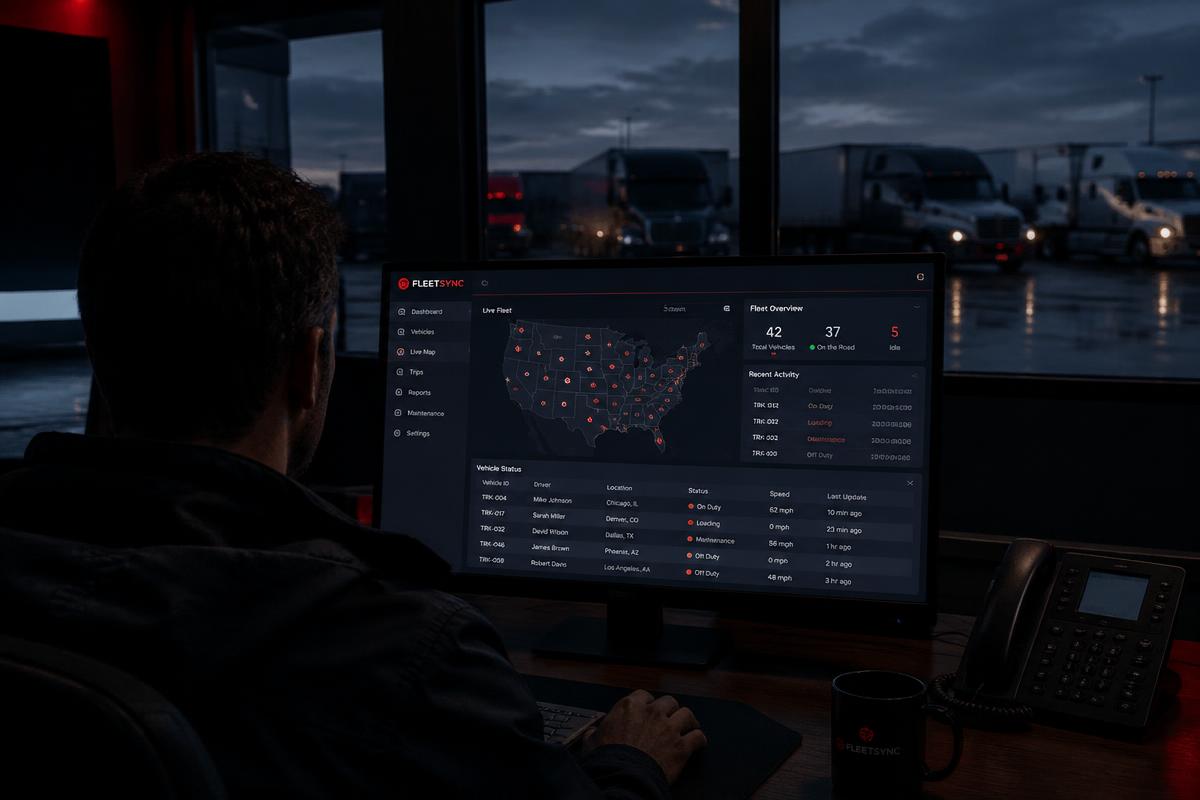
At its core, telematics combines GPS location data with vehicle diagnostics — speed, harsh braking events, idle time, engine fault codes, and fuel usage, reported back in something close to real time.
ELDs (already required for hours of service compliance on most fleets) often overlap with or feed into the same telematics platform, which is one reason the marginal cost of adding fuller telematics on top of an existing ELD system is often lower than fleets expect.
Where the Real Value Shows Up
The fleets that get genuine value from telematics tend to use it in a few specific ways: catching engine fault codes early enough to schedule maintenance instead of reacting to a breakdown, identifying which trucks or routes are burning more fuel than expected, and having objective data during a claims dispute or a customer's "where's my load" question. None of these require the most expensive platform on the market — they require someone actually reviewing the data on a regular basis.
Where Fleets Waste Money on Telematics
The most common way telematics spending goes to waste isn't buying the wrong platform — it's buying a platform and never building a routine around reviewing what it reports. A dashboard nobody looks at is a recurring cost with no return, regardless of how sophisticated the underlying technology is. This is a coordination problem as much as a technology one.
Driver Coaching, Not Driver Surveillance
Telematics data on harsh braking or speeding is most useful as a coaching tool, not a punitive one. Fleets that use the data to have specific, constructive conversations with drivers tend to see better long-term results than fleets that use it purely for discipline — drivers who feel surveilled rather than supported are more likely to look for work elsewhere, which cuts against retention in a tight driver market.
Is It Worth It for a Small Fleet?
For a fleet running fewer than five trucks, the case for telematics is closer to break-even — the data is useful, but the owner may already have enough direct visibility into each truck without it. Past that size, the ability to actually see what's happening across every truck without physically checking on each one tends to justify the cost fairly quickly, particularly for fuel and maintenance visibility.
How FleetForce Helps
Telematics data is only as useful as the coordination behind it — maintenance needs someone watching fault codes, dispatch needs someone factoring fuel and route data into planning, and accounting needs someone tying it back to per-truck cost tracking. FleetForce's maintenance and accounting support gives that data somewhere to go instead of sitting in an unreviewed dashboard.
One partner. Seven solutions.
Ready to take the next department off your plate?
Try FleetForce free for 7 days and see what dedicated operational support can do for your fleet.