
Every fleet owner has heard the term, and most could recite a rough version of the rules from memory. But hours of service rules are detailed enough that "roughly right" is exactly where violations start — and HOS violations are consistently among the most common issues found during roadside inspections and audits.
Here's what the rules actually say, and where fleets most often get tripped up.
The Core Limits, in Plain Language
For property-carrying drivers, the framework FMCSA sets out comes down to a few core numbers: an 11-hour driving limit within a 14-hour on-duty window, following 10 consecutive hours off duty. A 30-minute break is required after 8 cumulative hours of driving time. On top of the daily limits, drivers are capped at 60 hours on duty over 7 consecutive days, or 70 hours over 8 days, depending on the carrier's operating schedule.
These numbers interact with each other, which is exactly where confusion creeps in — a driver can be well within their 11-hour driving limit and still run out of usable hours because the 14-hour window closed around them.

The 14-Hour Window Trips Up More Drivers Than the 11-Hour Limit
The 14-hour on-duty window starts the moment a driver goes on duty and doesn't pause for traffic, detention time at a shipper, or anything else — it just runs. A driver who spends three hours waiting at a dock before ever moving the truck has already used three hours of their 14, whether they logged a single mile or not. This is one of the most common places HOS compliance breaks down, and it's rarely intentional — it's a scheduling and dispatch problem more than a driver-behavior problem.
ELDs Changed Enforcement, Not the Rules Themselves
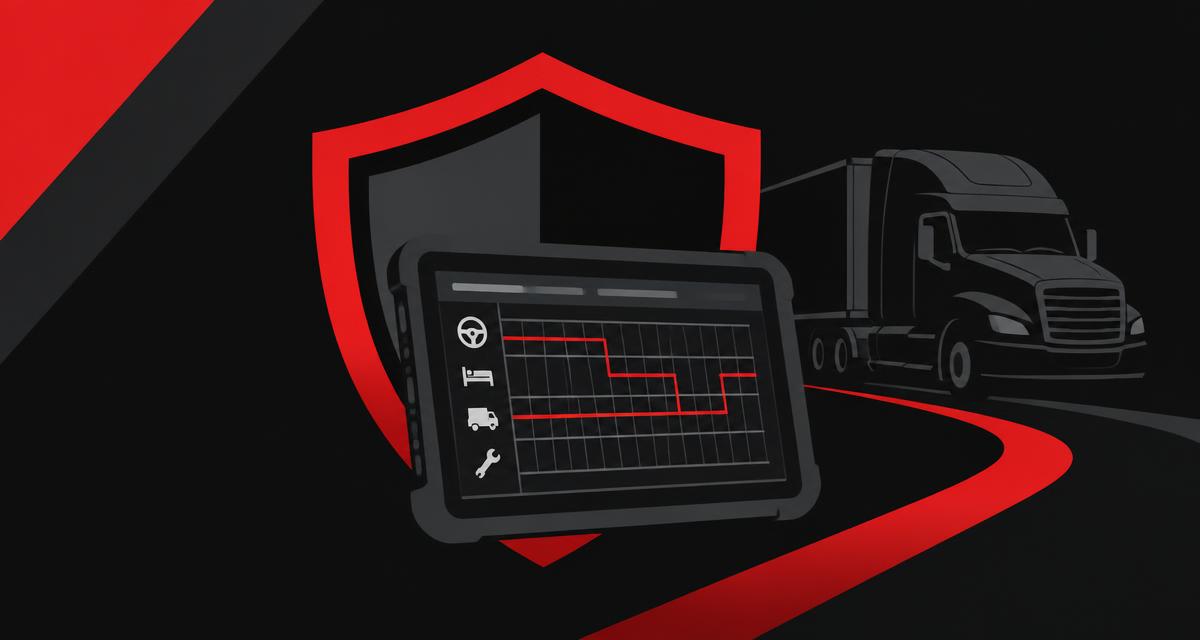
Electronic logging devices didn't create new hours of service requirements — they made existing requirements far harder to work around. Before mandatory ELDs, paper logs left room for interpretation. Now, the device tracks driving time automatically, which means dispatch decisions have to account for real HOS math in real time, not after the fact.
Where HOS Violations Most Often Originate
A driver's hours of service compliance is shaped upstream by decisions dispatch makes — load scheduling that doesn't account for a driver's remaining hours, routing that ignores detention risk, or pickup windows that assume zero delay. A fleet that treats HOS as purely "the driver's responsibility" is missing where most violations actually start.
What Fleets Get Right When HOS Is Handled Well
Fleets with strong HOS compliance tend to share a few habits: dispatch actively tracks each driver's remaining hours before assigning the next load, not after; drivers are coached on HOS planning rather than blamed after a violation; and detention time at shippers and receivers is tracked and factored into future scheduling for that customer.
How FleetForce Helps
FleetForce's dispatch support factors driver hours into load planning from the start, not as an afterthought — which is one of the most effective ways to keep HOS violations from happening in the first place. Paired with our safety and compliance support, fleets get hours-of-service management built into daily operations rather than bolted on after a violation shows up on a CSA score.
For the complete regulatory detail beyond this overview, FMCSA's Summary of Hours of Service Regulations is the authoritative source and worth bookmarking directly.
If dispatch and HOS planning have felt disconnected in your operation, the 7-day free trial is a low-risk way to see what coordinated dispatch support looks like in practice.
One partner. Seven solutions.
Ready to take the next department off your plate?
Try FleetForce free for 7 days and see what dedicated operational support can do for your fleet.