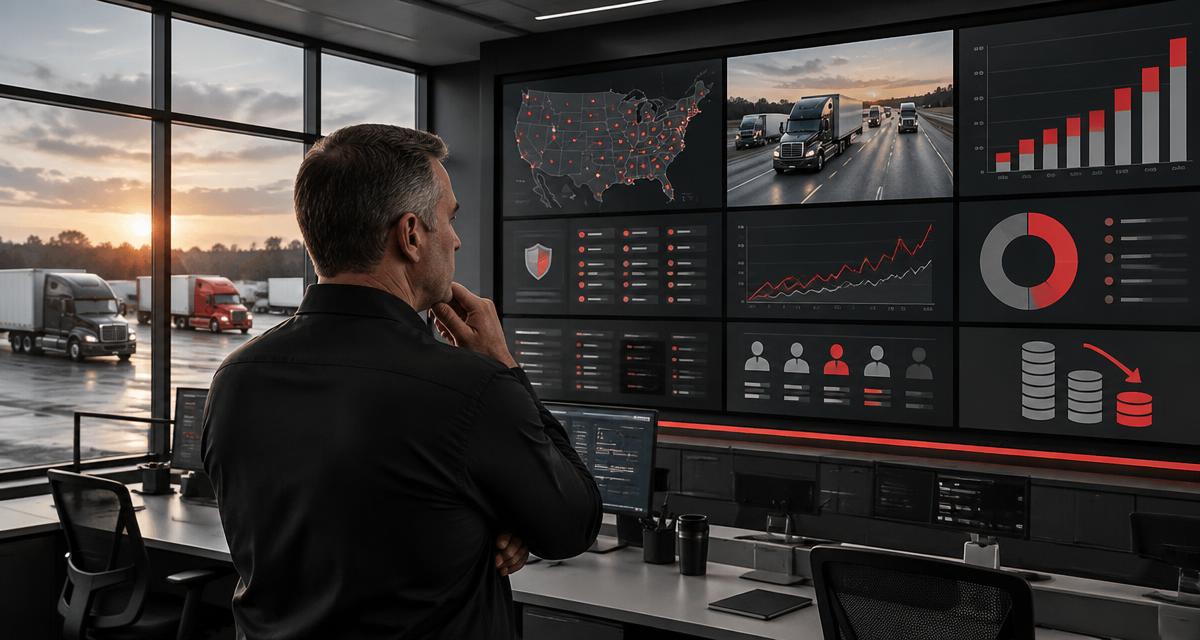
Most fleet owners don't sit down and deliberately decide to run dispatch, safety, recruiting, maintenance coordination, accounting, HR, and sales all themselves. It happens gradually — you start with one truck, handle everything yourself out of necessity, and as the fleet grows, you either keep absorbing more department work personally or start hiring one role at a time. Few owners ever stop to add up what that actually costs, in dollars and in time, compared to the alternative.
This is an honest look at both sides of fleet management outsourcing — what building departments in-house really costs, and what a partnership model looks like instead.
What Building These Departments In-House Actually Costs
Hiring for even one of these functions — say, a full-time dispatcher — isn't just a salary. It's payroll taxes, any benefits offered, the time spent recruiting and training that hire, and the risk of turnover right when you need consistency most. Multiply that across dispatch, safety/compliance, recruiting, maintenance coordination, accounting, HR, and sales, and the trucking overhead costs of building a full back office in-house add up to a substantial, ongoing fixed expense — one that doesn't flex when freight volume dips.
There's also a less visible cost: management time. Every employee you hire is someone you now have to manage, train, and cover for when they're out. For a small fleet owner, that's often time pulled directly away from growing the business.
What Doing It Yourself Costs (Even Without Hiring Anyone)
The other common path is the owner absorbing these functions personally instead of hiring for them. This avoids payroll costs, but it isn't free — it's just a cost paid in time, stress, and opportunity rather than dollars. Every hour spent negotiating a rate, tracking a DQ file expiration, or reconciling settlements is an hour not spent growing the business, building broker relationships, or simply running the company at a sustainable pace. Owner burnout is a real, if harder to quantify, cost of this approach.
In-House vs. Outsourced Dispatch (and Every Other Department)
A partnership model — where a dedicated outside team handles one or more departments — sits between these two options. Instead of a fixed salary cost per department, or an owner's own unpaid time, it's structured as an ongoing cost that scales with the fleet, typically as a percentage of revenue per truck rather than a flat rate that hits a small fleet the same way it hits a large one.
The honest comparison isn't "outsourcing costs money and doing it yourself is free." It's: what does it cost to build and manage these departments yourself — in dollars, time, or both — versus what a dedicated partner costs to do the same work, often with more consistency than a single in-house hire or an owner splitting attention seven ways.
A Framework for Thinking It Through
A few questions tend to clarify which departments are worth outsourcing first:
- Which department is costing you the most time right now, relative to how much it should?
- Where have mistakes or gaps actually cost you money — a missed compliance deadline, an empty truck, a payroll error?
- Which functions would genuinely benefit from dedicated, consistent attention that a stretched owner or a single generalist hire can't provide?
- Do you need all seven departments supported, or just the one or two causing the most strain today?
How FleetForce Approaches This
FleetForce is built around letting fleet owners choose exactly which departments to hand off — dispatch, recruiting, safety, maintenance coordination, accounting, HR, and sales — rather than an all-or-nothing commitment. Pricing scales with fleet size instead of hitting a small operation the same way it hits a large one, and every relationship starts with a 7-day free trial and a short-term contract, so you can see the actual difference before committing to anything.
One partner. Seven solutions.
Ready to take the next department off your plate?
Try FleetForce free for 7 days and see what dedicated operational support can do for your fleet.