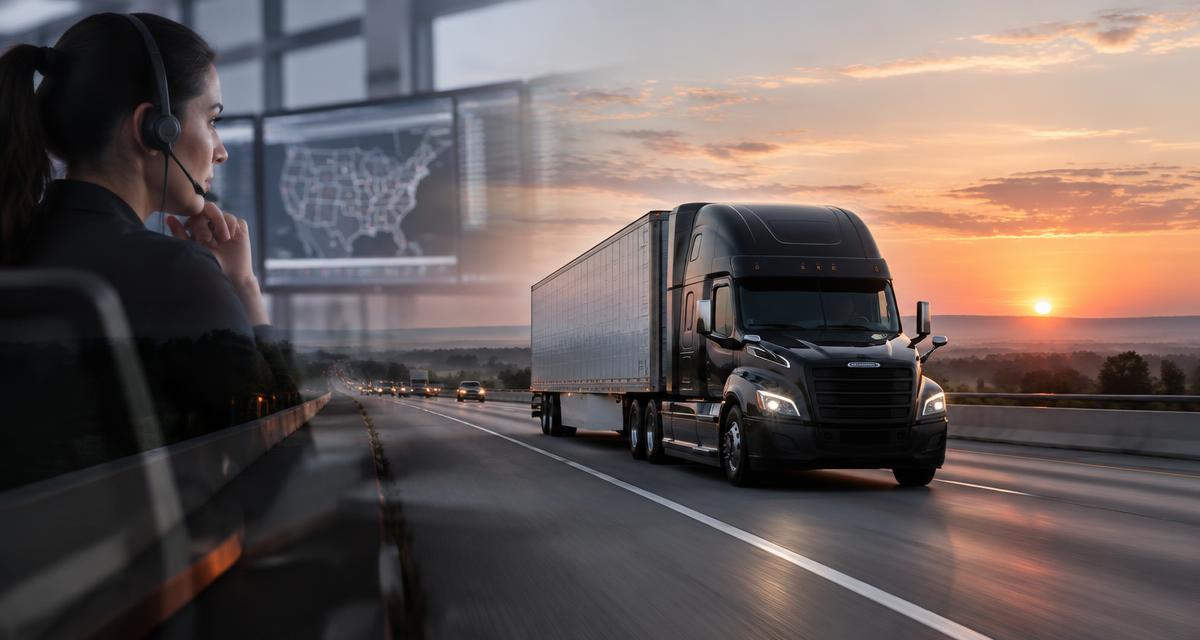
Ask most owner-operators or small fleet owners what eats the most hours in their week, and dispatch is usually near the top of the list. Finding loads, negotiating rates, tracking drivers, handling check calls, fielding a breakdown at 9 p.m. — dispatch never really clocks out. For a lot of trucking companies, it's the function that quietly determines whether trucks are running full and on time, or sitting idle while the owner tries to do five jobs at once.
That's why truck dispatch services have become one of the first functions small and mid-size fleets consider outsourcing. It's not about giving up control of the business — it's about putting a dedicated person (or team) on the one job that directly drives revenue per truck.
What a Dispatcher Actually Does, Beyond "Finding Loads"
Dispatch looks simple from the outside — find a load, assign a driver, done. In practice, a good dispatcher is running several jobs at once:
- Sourcing loads that fit the lane, equipment, and rate targets, not just whatever's available
- Negotiating rates instead of accepting the first number on the board
- Sequencing loads to minimize deadhead miles and keep drivers moving
- Tracking hours of service so drivers don't get boxed into a load they can't legally finish
- Handling the phone calls — brokers, shippers, receivers, drivers — all day, every day
- Reacting fast when something goes wrong: a delay, a breakdown, a rejected load
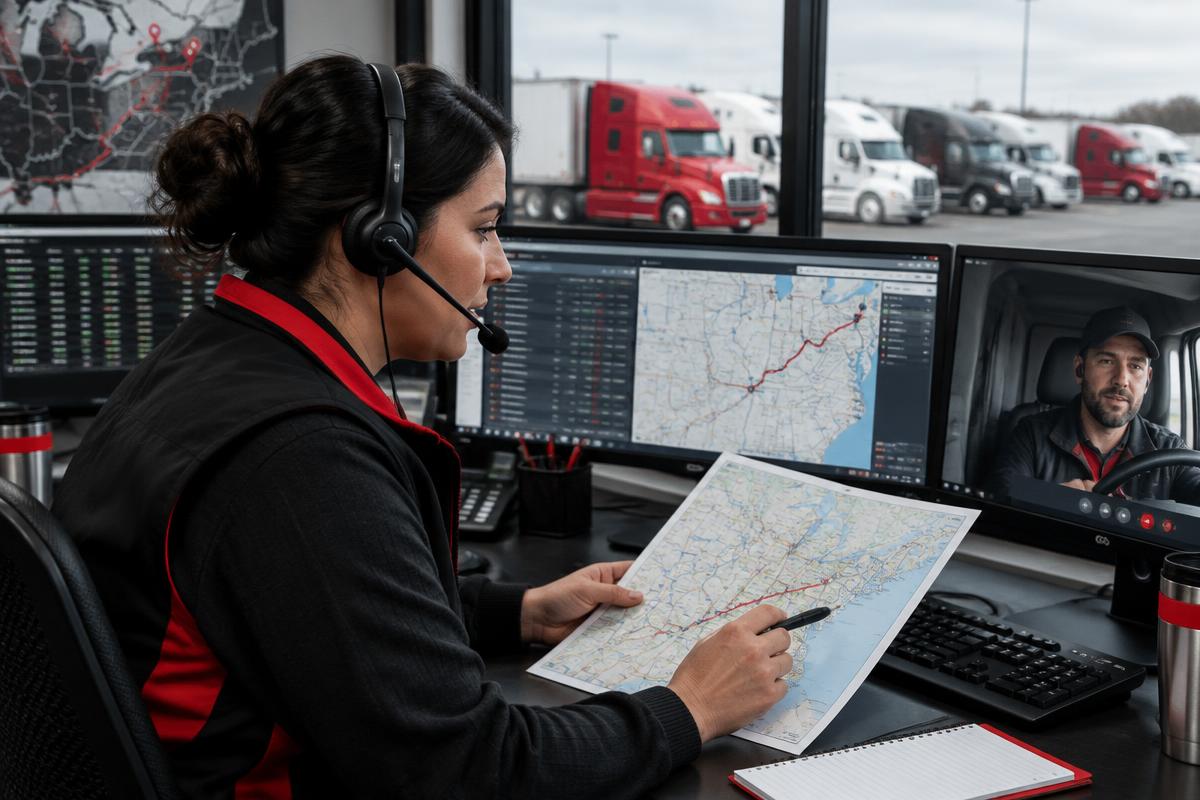
Miss any one of these consistently, and it shows up as empty miles, drivers waiting around, or rates that are lower than they should be.
The Real Cost of DIY Dispatch
Plenty of owner-operators and small fleet owners dispatch their own trucks, especially early on, and there's nothing wrong with that. The problem shows up as the fleet grows. Once you're managing more than a couple of trucks while also handling sales, maintenance calls, and paperwork, dispatch is usually the first thing that gets rushed — and rushed dispatch decisions tend to be expensive ones: a lower rate accepted because there wasn't time to negotiate, a truck sitting an extra day because no one was watching the board, a driver running an illegal load because hours of service weren't checked closely enough.
None of that shows up as a line-item cost. It shows up as lower revenue per truck, and it's easy to miss until you actually add it up.
In-House Dispatcher vs. Outsourced Dispatch Services
Hiring a full-time, in-house dispatcher is a legitimate option — but it comes with a full-time cost: salary, payroll taxes, benefits if you offer them, training time, and the risk of turnover right when you need consistency most. For a fleet running a handful of trucks, that overhead can be hard to justify against the revenue those trucks generate.
Outsourced dispatch trucking support solves the same problem — a dedicated person managing your loads and drivers — without the fixed overhead of a full-time hire. You get dispatch coverage that scales with your fleet, whether that's two trucks or twenty, and you're not the one stuck negotiating rates from a truck stop at midnight.
What to Look for in Fleet Dispatch Management
Not all dispatch support is equal. Before you hand off this function, it's worth asking:
- Do they understand your specific lanes and equipment, or are they generic?
- How do they communicate with drivers — text, call, app — and does that match how your drivers actually work?
- Who's covering dispatch outside business hours, when problems tend to happen?
- Is pricing tied to your fleet size and needs, or a flat rate regardless of how much support you actually use?
- Can you scale the relationship up or down as your fleet changes?
How FleetForce Approaches Dispatch
FleetForce's dispatch support is built around exactly this: a dedicated point of contact who knows your trucks, your lanes, and your drivers — handling load sourcing, rate negotiation, and day-to-day coordination so you're not doing it from the cab or the kitchen table. It's one of seven departments FleetForce can support (alongside recruiting, safety, maintenance coordination, accounting, HR, and sales), and you choose which ones you actually need.
If dispatch is the department eating the most of your week right now, it's usually the one worth outsourcing first — try FleetForce free for 7 days and see what it's like to have someone else own the board.
One partner. Seven solutions.
Ready to take the next department off your plate?
Try FleetForce free for 7 days and see what dedicated operational support can do for your fleet.